What climatic design data was updated?
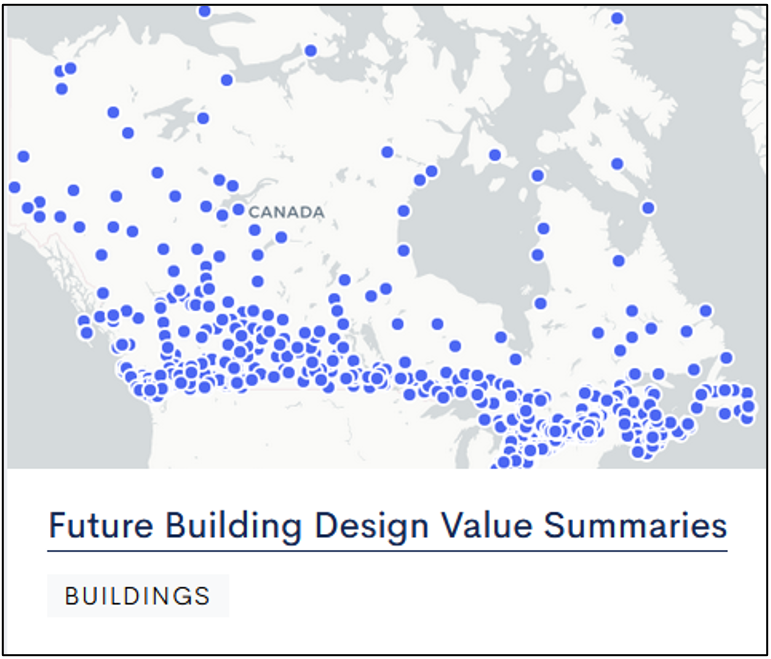
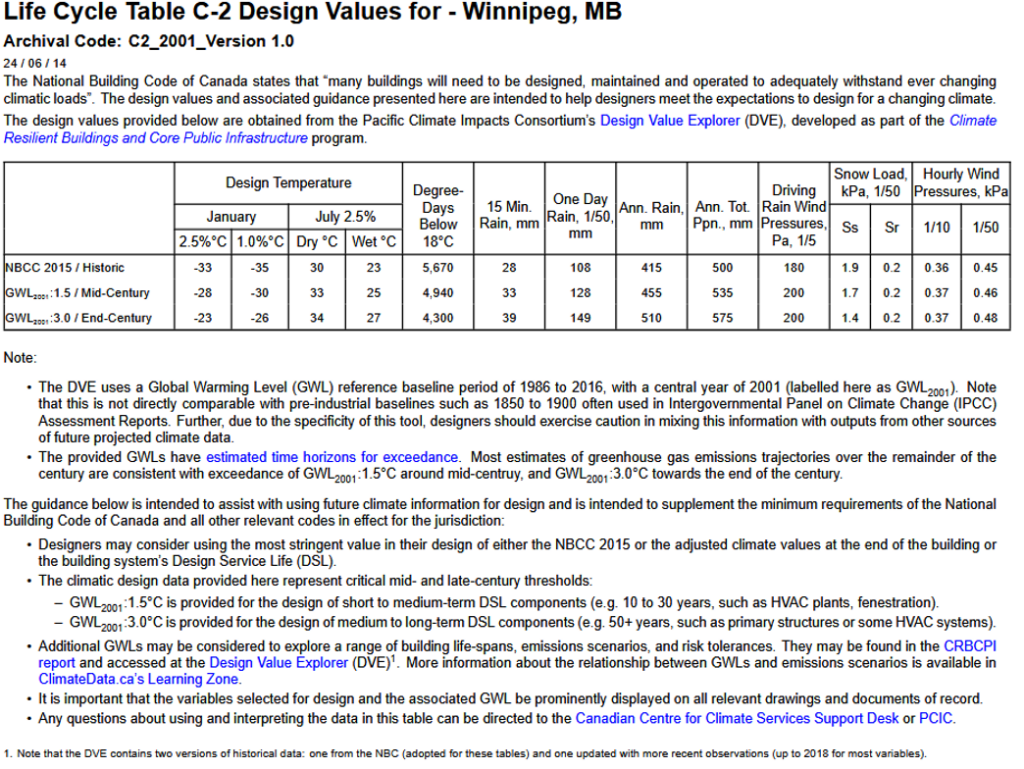
Like previous NBC publications, climatic design data is presented in Table C-2 for more than 680 locations. These data include variables used throughout the Code, such as temperature, precipitation, wind, and snow. What has changed is how certain values are determined: NBC 2025 incorporates information from climate projections to inform where future conditions are expected to increase design demands.
Where warming is projected to intensify design-relevant conditions, the corresponding values are adjusted to reflect future climate conditions. Where projected changes would reduce design demands, current (historical) values are retained to ensure buildings remain robust under present-day conditions throughout their service life.
For example, July design temperatures are adjusted to reflect projected increases in summer heat. In contrast, values such as heating degree-days (a value that can be used to compute heating requirements during winter) and January design temperatures remain based on historical data, as buildings must still perform reliably under today’s cold-season conditions.
On a pathway to 2.5 °C of global warming
The 2025 NBC integrates climate design values that represent conditions along a pathway toward a global warming level (GWL) of 2.5°C. A GWL is a measure of global average temperature change relative to a reference period (a baseline). In Appendix C of the NBC, the baseline used for the supporting projection work is 1986–2016.
Appendix C also notes that projections were developed for other warming levels, spanning 0.5°C to 3.5°C (in 0.5°C steps) relative to the same baseline. These additional warming levels provide a consistent way to examine how climatic design conditions may differ under lower or higher levels of global warming.