Spiking Temperatures: How climate change is impacting beach volleyball in Canada

Date July 14, 2026
Author Frances Delaney and Casey Clunas, Canadian Centre for Climate Services
Topics Climate Data in Action
Share this post

Introduction

Beach volleyball is a popular sport that is played recreationally and professionally across the country. Courts are usually found on local beaches and in indoor and outdoor facilities. The sport has gained momentum in Canada, especially since Canada won the silver medal in women’s beach volleyball at the 2024 Paris Olympics [1].  Montreal hosts the annual Volleyball World Beach Pro Tour, a competition that attracts spectators from all over the world.

However, like many outdoor sports, beach volleyball is increasingly feeling the effects of our changing climate. Rising temperatures, extreme weather events, wildfire smoke, and coastal erosion are reshaping beaches across Canada, while also posing growing risks to the health and safety of the athletes and spectators who gather to play and watch. Elite athletes are beginning to discuss the impacts that they are experiencing as temperatures continue to rise, with one Olympian speaking out (Melissa Humana-Paredes) after temperatures at the 2025 Montreal Beach Pro Tour soared above 30°C. As beach volleyball continues to gain popularity, now is the time to examine how climate change is affecting the sport and how we can protect the beaches, players, and fans that make it possible.

“[At the Tokyo Olympics] we saw sports changing venues or times because it was too hot. For the marathon, they had to change location. For the women’s soccer gold medal match, they changed the time from day to night. These are things we never heard of before.”

Melissa Humana-Paredes Beach Volleyball Olympian

Rising temperatures and hotter sand


Professional events like the Montreal Beach Pro Tour attract world-class players and hundreds of fans every August to Parc Jean-Drapeau, just south of the city of Montreal. This region, like almost all regions across southern Canada, is expected to experience a large increase in extremely hot, potentially dangerous summer days.

Hot air temperatures have many direct health impacts, such as heat exhaustion and heat stroke. Higher air temperatures can also lead to higher sand temperatures, though factors like cloud cover, relative humidity, and shade can mitigate or amplify the effects. High sand surface temperatures can lead to first-, second-, and even third-degree burns in rare cases. Beach volleyball players spend hours diving, sprinting, and jumping barefoot on hot sand, making this a safety issue that could cut games short or sideline players due to injury. 

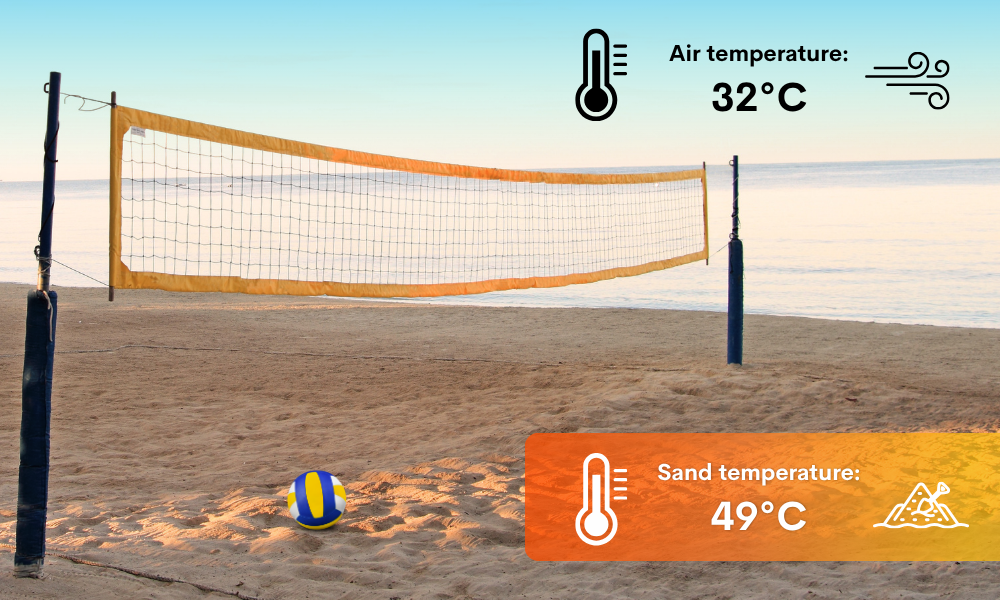
When air temperatures are relatively moderate (e.g., 24°C (75°F)), sand temperatures can reach 38°C (100°F) in direct sunlight. When air temperatures reach 32°C (90°F), however, sand temperatures can reach over 49°C (120°F) [2] (Figure 1). Skin begins to burn when surface temperatures reach 44°C (111°F) [2].

Focusing on Montreal, home of the Beach Pro Tour in Canada, Table 1 compares the historical and projected future frequency of days with air temperatures above 29°C, which can correspond to sand temperatures of approximately 44°C or higher. This threshold was selected because it represents conditions where hot sand may pose a burn risk to barefoot athletes. For context, the table also includes an indicator of conditions that may meet Environment and Climate Change Canada’s extreme heat warning criteria, allowing for a comparison between potential sand heat risks and broader heat-related health risks.

Figure 1: The impacts of rising air temperatures on sand temperatures. Infographic developed from findings from: Cohen, 2019.

Sand Heat Risks Table

Table 1. Sand heat risks in Montreal historically and in the future (2021–2050 and 2051–2080) under moderate (SSP2-4.5), high (SSP3-7.0), and very high (SSP5-8.5) emissions scenarios.

Annual Historical Average
(1971–2000; median)
Annual Future Projection Average
(2021–2050; median)
Annual Future Projection Average
(2051–2080; median)
Heat VariableSSP2-4.5SSP3-7.0SSP5-8.5SSP2-4.5SSP3-7.0SSP5-8.5SSP2-4.5SSP3-7.0SSP5-8.5
Local Heat Warning potential* (Days with Humidex >40°C**)1**15**610**22
Potential Days with Sand Temperature >44°C (air temperature >29°C)***161616373839495867

* In Montréal, heat warnings issued by Environment and Climate Change Canada are triggered when temperatures of at least 30°C combined with a humidex of 40 or higher are expected to last for at least one hour (or when temperatures reach 40°C or higher). Therefore, the number of projected days with a humidex above 40 should be interpreted as an indicator of extreme heat potential, not a direct count of future heat warning days.

** Humidex values are not available for SSP3-7.0.

*** Calculated by assuming sand temperature = air temperature + 15°C based on Cohen (2019). Actual sand temperatures can vary depending on shade, cloud cover and moisture. This is intended as an illustration of potential sand heat risk.

Table 1 shows that, under all emissions scenarios, by 2021-2050, Montreal could experience 37-39 days where sand temperatures are potentially dangerous (21 to 23 more days than Montreal has experienced in the past), and by 2051-2080, this number could jump to 49 to 67 days (33 to 51 more days than historically). To learn more about emissions scenarios, visit the Learning Zone.  

Box 1: Heat risks and open-air stadiums

Not only is heat a concern for the beach volleyball players but also for the audience. Most professional beach volleyball events take place in open-air arenas or stadiums, like the Montreal Beach Pro Tour, where spectators are also at risk of rising temperatures. Temperatures inside open-air stadiums can be much higher than surrounding environments and weather station readings, due to large crowds and greater absorption of radiation from the sun [3]. Heat-related illnesses are the primary cause of morbidity and mortality at mass gatherings, including sporting events [3]. This emphasizes the need for undertaking adaptation measures at events such as the Montreal Pro Beach Tour that protect both the players and the audience (e.g., more shading, more drinking water fountains, more fans, etc.).

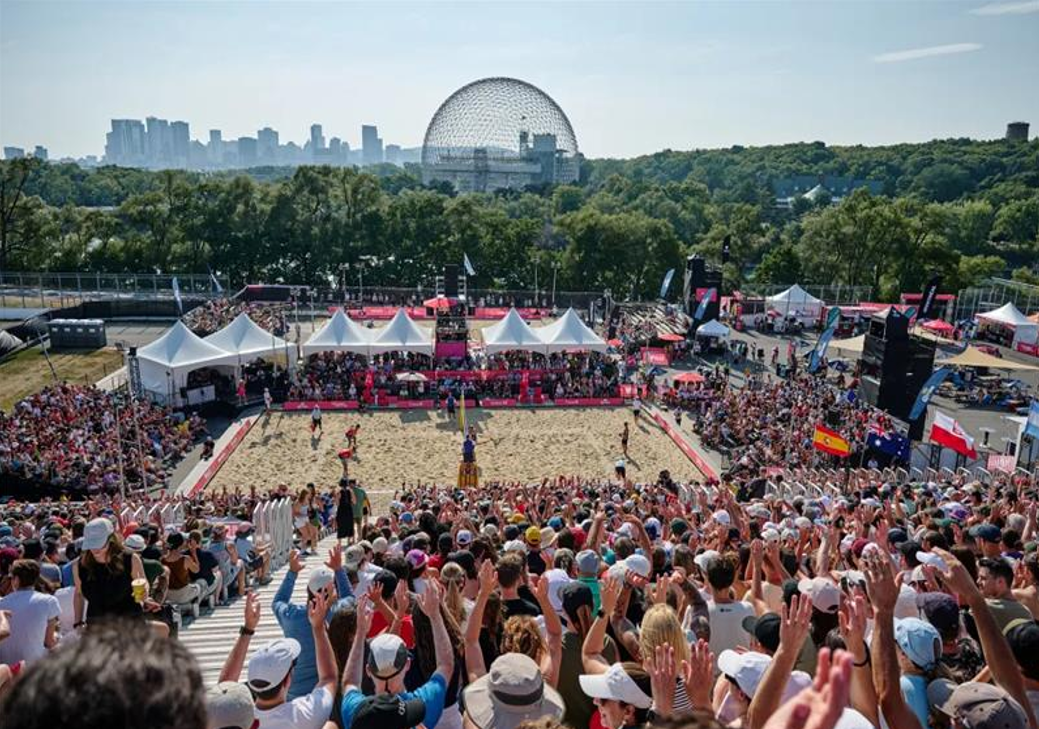
Figure 2: The audience of the Montreal Pro Tour, August 18, 2025. Source: Guilbaud, 2025.

August 2026 Seasonal Forecast


While we can generally count on increasing summer temperatures now and into the future, there are tools to help understand just how much heat may impact events from year to year.

Box 2: ClimateData.ca now includes monthly and seasonal temperature forecasts. These forecasts are produced by Environment and Climate Change Canada and are updated each month. Unlike daily weather forecasts, seasonal forecasts provide information about the likelihood of above-, near-, or below-normal temperature over the next one to three months and over rolling 3-month periods covering the next twelve months. Seasonal temperature and precipitation forecasts cannot predict extreme events or daily weather. Rather, they provide information about average conditions for the month or season as a whole. Click here to explore seasonal and monthly forecasts: Explore Maps – ClimateData.ca.

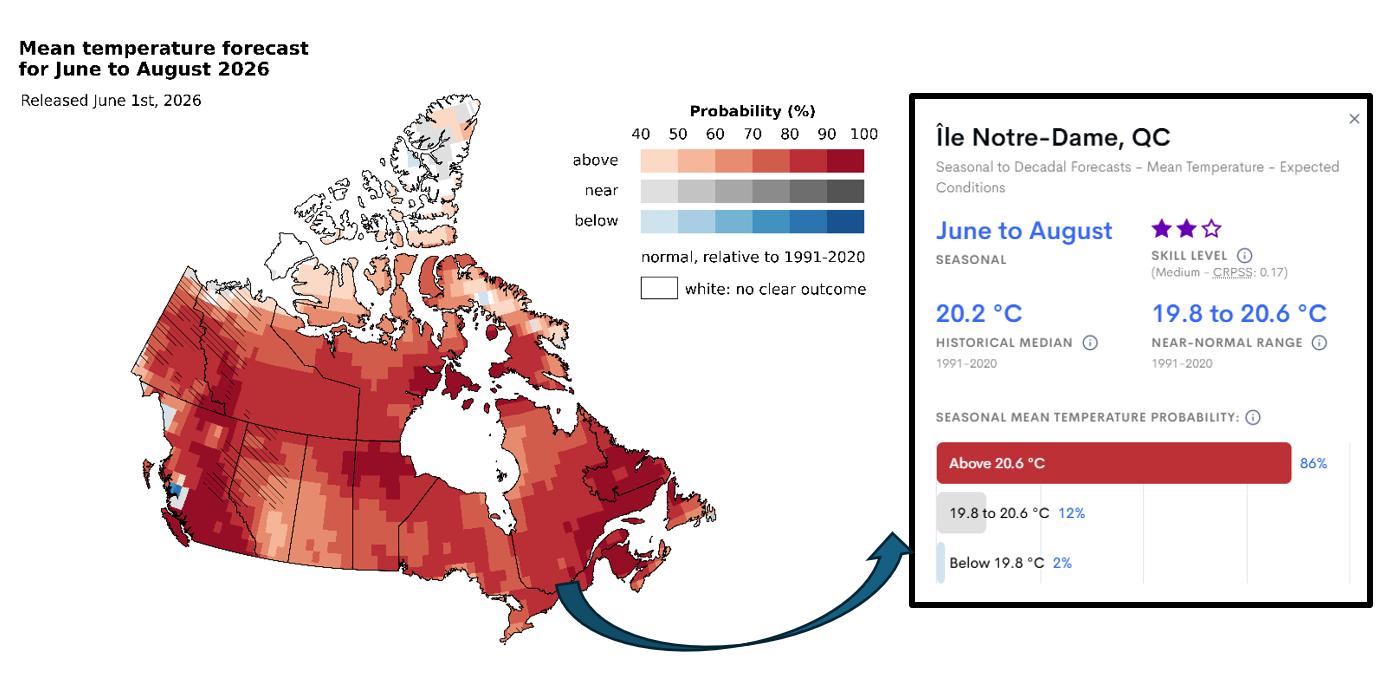
According to the seasonal forecast for June to August 2026, organizers of the Montreal Pro Tour can anticipate a warmer than normal summer this year (Figure 3). Montreal has about an 86% chance of experiencing a warmer than normal summer (above 20.6°C), and a 72% chance of having an “unusually warm” summer. “Unusually high” refers to temperatures exceeding the 80th percentile of a historical climatology covering 1991 to 2020.

Figure 3: Seasonal temperature forecast for June to August 2026 for Canada. The forecast gives the probabilities of temperatures being above, near, or below normal (relative to the 1991 to 2020 historical climatology).

Wildfires and air quality

Another one of the rising climate concerns faced by outdoor sports is the impact of wildfire smoke on players and spectators. In 2023, Canada had a record-breaking wildfire season, where 15 million hectares of land were burned [4]. Even though these fires burned in rural areas or unpopulated areas, the effects of the smoke impacted Canadians across the country, and even internationally. In July 2025 during another intense wildfire season, news articles reported that Montreal had some of the worst air quality in the world because of the smoke [5].

The impacts of wildfire smoke on humans can be both acute and chronic. Poor air quality due to smoke can cause respiratory issues, mental health impacts, and even mortality in certain cases [6]. As a result of the health impacts from smoke, days with poor air quality can lead to cancellations of outdoor activities, like beach volleyball. In the 2025 Canada Summer Games, the fires in St. John’s Newfoundland brought smoke to the area, cancelling all beach volleyball games on August 12 [7].

“Wildfires are happening all the time now. That changes the air quality and makes it unhealthy. When you are practicing outdoor sports you have to be conscious of what you inhale and air quality, it is all about danger and safety… You have to demand yourself as an athlete no matter the situation you are in, you have to overcome the odds and defeat the obstacles. But sometimes you forget that our health and safety is number one.”

Melissa Humana-Paredes Beach Volleyball Olympian

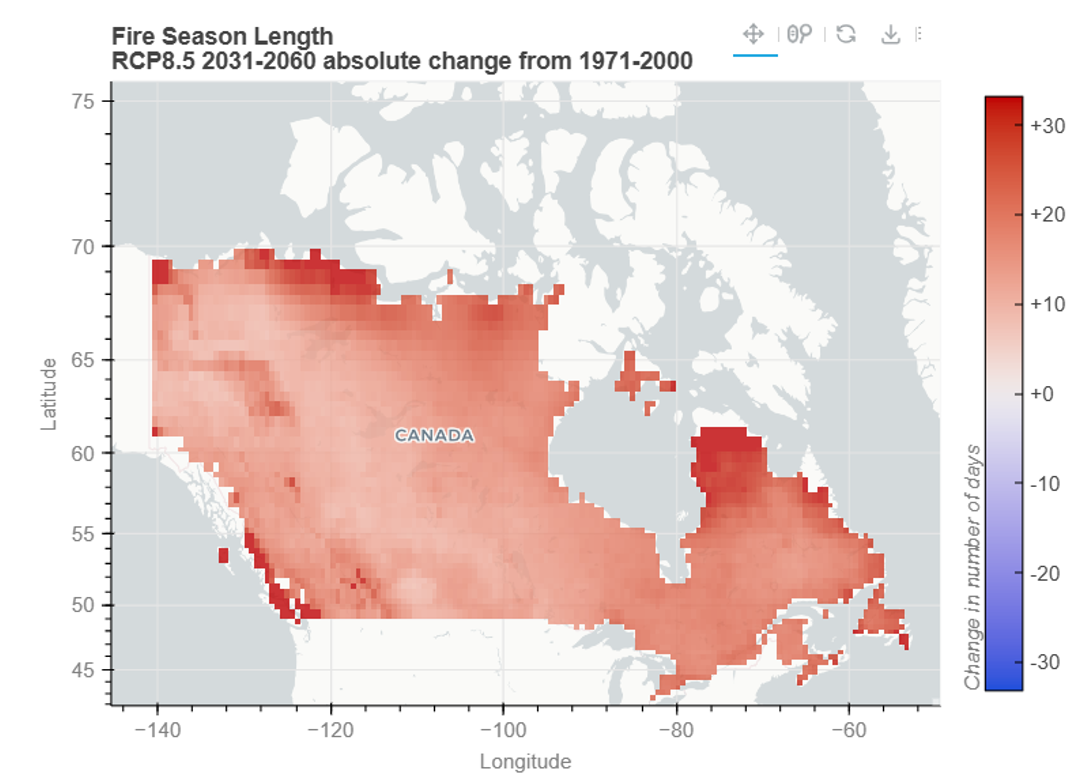
While ClimateData.ca does not provide projections of future wildfire smoke or air quality, the Fire Weather Index App can help outdoor event organizers explore climate conditions that influence wildfire risk (Figure 5). Various fire-weather projections, such as ‘fire season length’ show fire danger in Canada is projected to increase in a warming climate. Even in areas with lower risk of wildfire like Montreal, a longer fire season generally results in a greater likelihood of poor air quality events due to smoke from other areas with active fires.

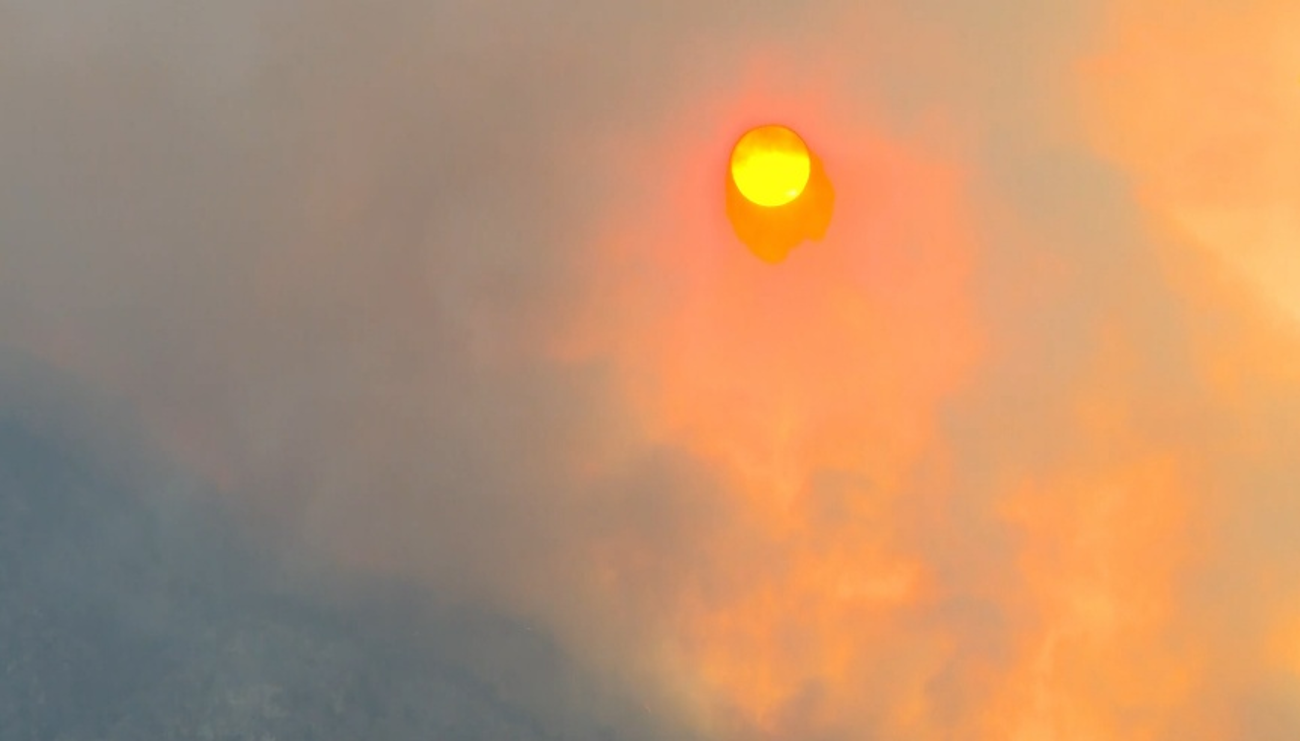
Figure 4: Sky full of wildfire smoke. Source: Global News, 2024.

Figure 5: This map shows the absolute change by 2031-2060 from 1971-2000 in the fire season length under the RCP8.5 emissions scenario. The fire season length metric represents the annual count of days in the fire season (days when wildfires are likely to start and spread). The fire season begins after three consecutive days with daytime maximum temperatures greater than 12°C. The fire season ends after three consecutive days of daytime maximum temperatures remaining below 5°C. The interactive fire weather app allows users to hover over the map to get specific values, as well as change the time period, emissions scenario, and more.

Box 3: Coastal changes are reshaping beaches

Climate change is driving sea level rise and ocean warming, which in turn increases the risk of coastal erosion and more intense storm impacts. Higher sea levels allow waves to reach further inland, accelerating the loss of beaches, reshaping shorelines, and impacting existing and future beach courts. View projected sea level change on the map to see how beaches in your area might be impacted.

“There are more extreme thunderstorms or extreme rising of the sea water levels. Now the beaches are becoming smaller. There is less room to put courts on beaches.” 

Melissa Humana-Paredes Beach Volleyball Olympian

Conclusion


Beach volleyball has always been a celebration of summer. However, the conditions that define the sport are changing. From risks associated with hotter temperatures and hotter sand, to wildfire smoke disrupting outdoor events, to coastlines being reshaped by erosion and sea level rise, climate change is influencing where, when, and how the game can be played across Canada.

ClimateData.ca can help players, event organizers, communities, and facility managers better understand how the conditions that support beach volleyball are changing over time. From rising temperatures and increasing heat-related risks to changing wildfire and coastal conditions, climate information can help inform conversations about adaptation, event planning, infrastructure, and long-term resilience. By understanding these emerging challenges and planning accordingly, Canadians can help ensure that beach volleyball remains a safe and enjoyable part of summer for years to come.