In January 2026, seasonal forecasts were added to ClimateData.ca. Seasonal forecasts help bridge the gap between short-term weather forecasts and long-term climate projections, enabling users to obtain information about the probability of conditions in upcoming seasons being hotter, cooler, drier, or wetter than normal1. For more information about the development, availability, and application of seasonal forecasts, visit the S2D landing page on ClimateData.ca.
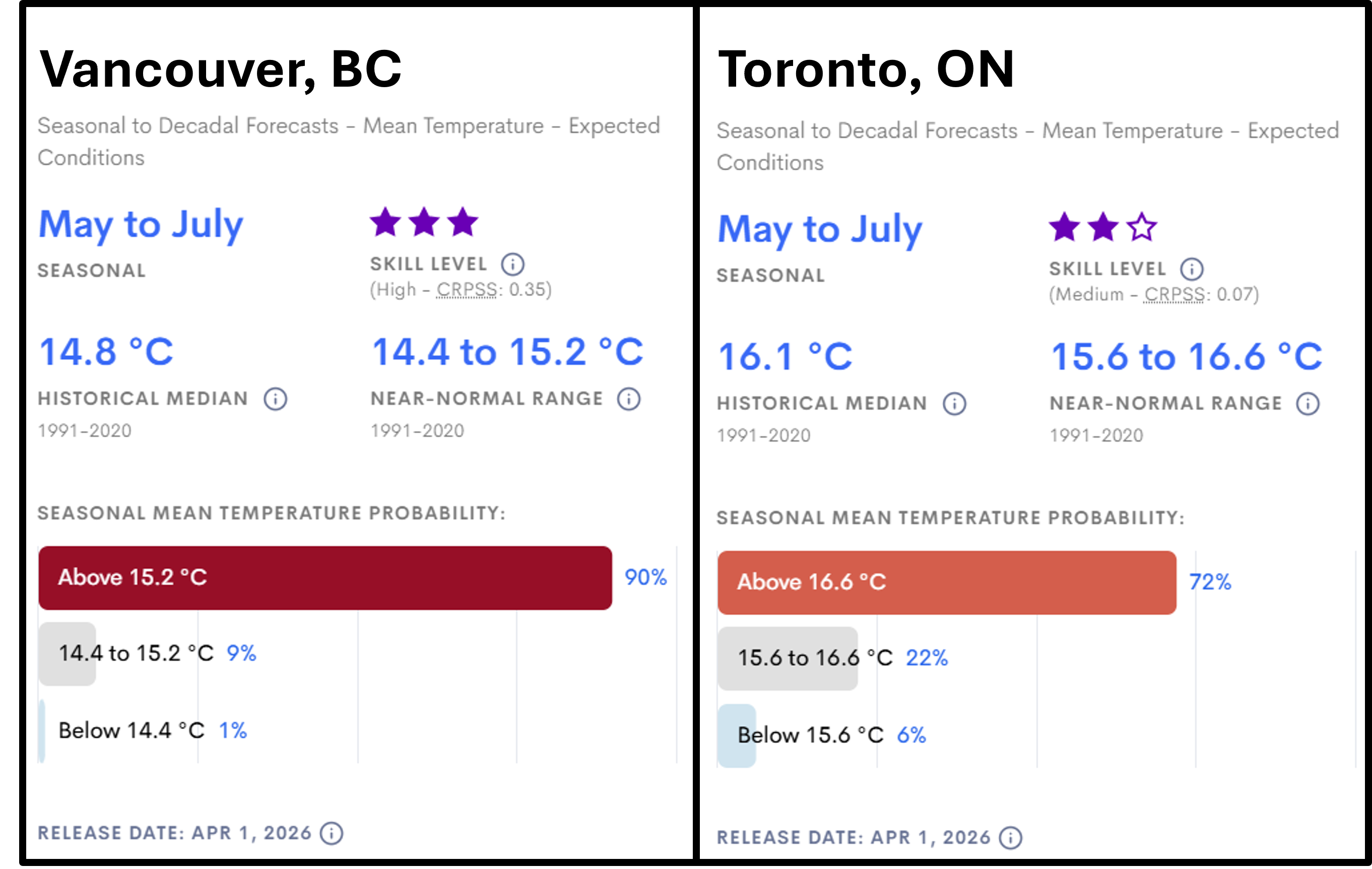
With around two months until the World Cup, the seasonal forecast for May to July 2026 tells us that there is a 90% chance that the average temperature in Vancouver will be warmer than normal2. In Toronto, the probability that the average temperature for May to July 2026 will be warmer than normal is 72% (Figure 2).
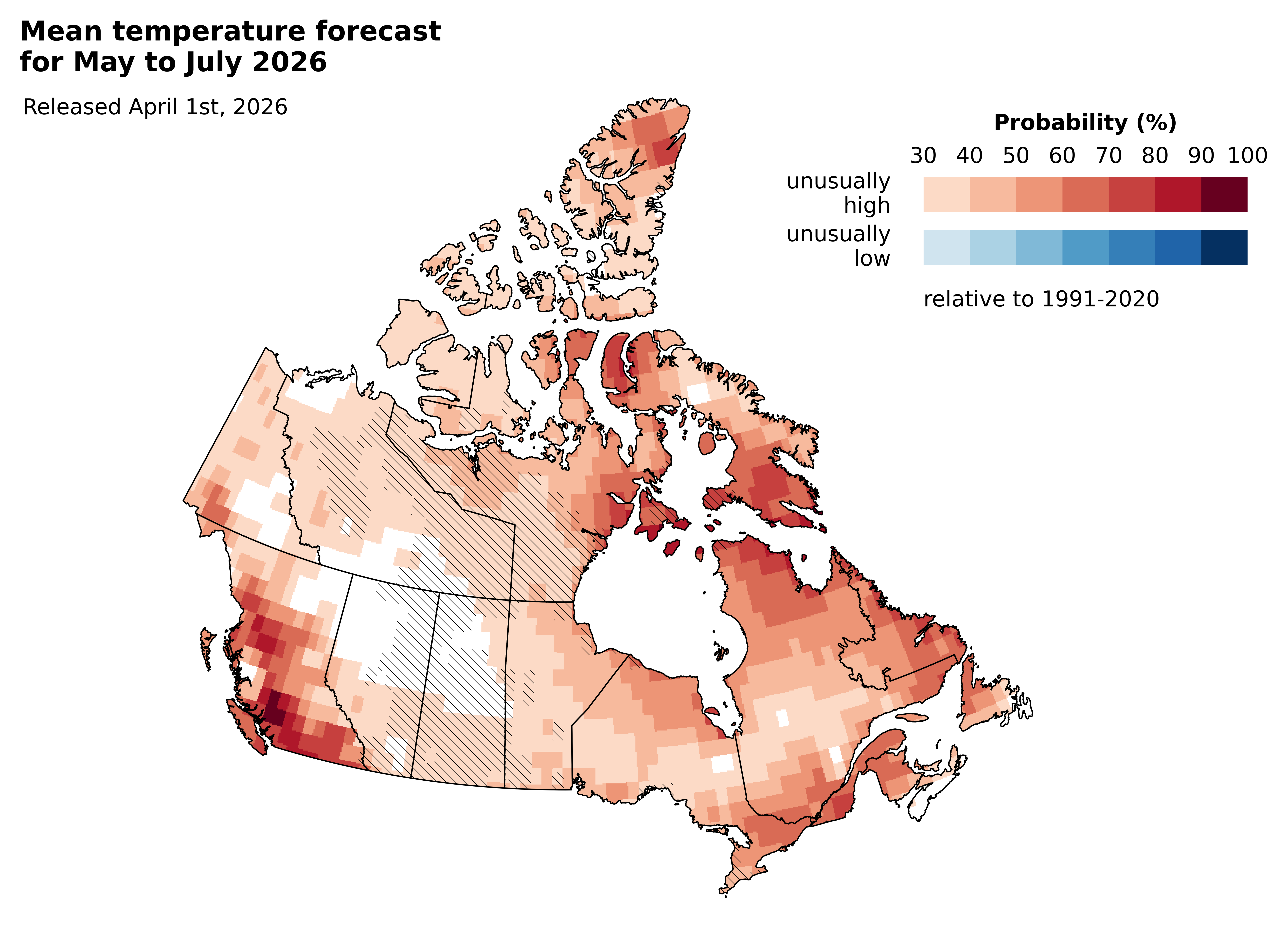
The seasonal forecasts on ClimateData.ca also enable us to determine the probability of “unusually hot” average temperatures – where “unusually hot” means at least as hot as the hottest 20% of May to July average temperatures between 1991 and 2020. In Vancouver, that probability is 77%, and in Toronto, it’s 55% (Figure 3). Therefore, it is likely that average temperatures will be unusually hot while the World Cup is taking place in Canada.
Note that the forecast skill for all the probabilities provided indicates that the seasonal forecast is a better guide than the historical climatology. As the tournament gets closer and updated forecasts are released, this skill level will stay the same or improve slightly.
Given the relationship between higher average temperatures and extreme heat, tournament organizers, participating teams, and host cities and venues may wish to consider preparing for hot temperatures affecting this summer’s World Cup. For example, proactive measures could include assessing demand for cooling infrastructure, verifying that shade and water are readily available to spectators, and participating teams evaluating potential adjustments to tactics and substitution strategies.
[1] Normal being average conditions for the 1991-2020 period.
[2] Forecast data as of April 1, 2026.