New and Noteworthy: Monthly and Seasonal Forecasts now on ClimateData.ca
What’s new?
Monthly and seasonal forecast maps are now available on ClimateData.ca! Monthly, seasonal, and decadal forecasts help bridge the gap between weather forecasts and longer-term climate projections. You can now explore and download location-specific information for the coming months and seasons using the same interactive map interface used for historical data and future climate projections.
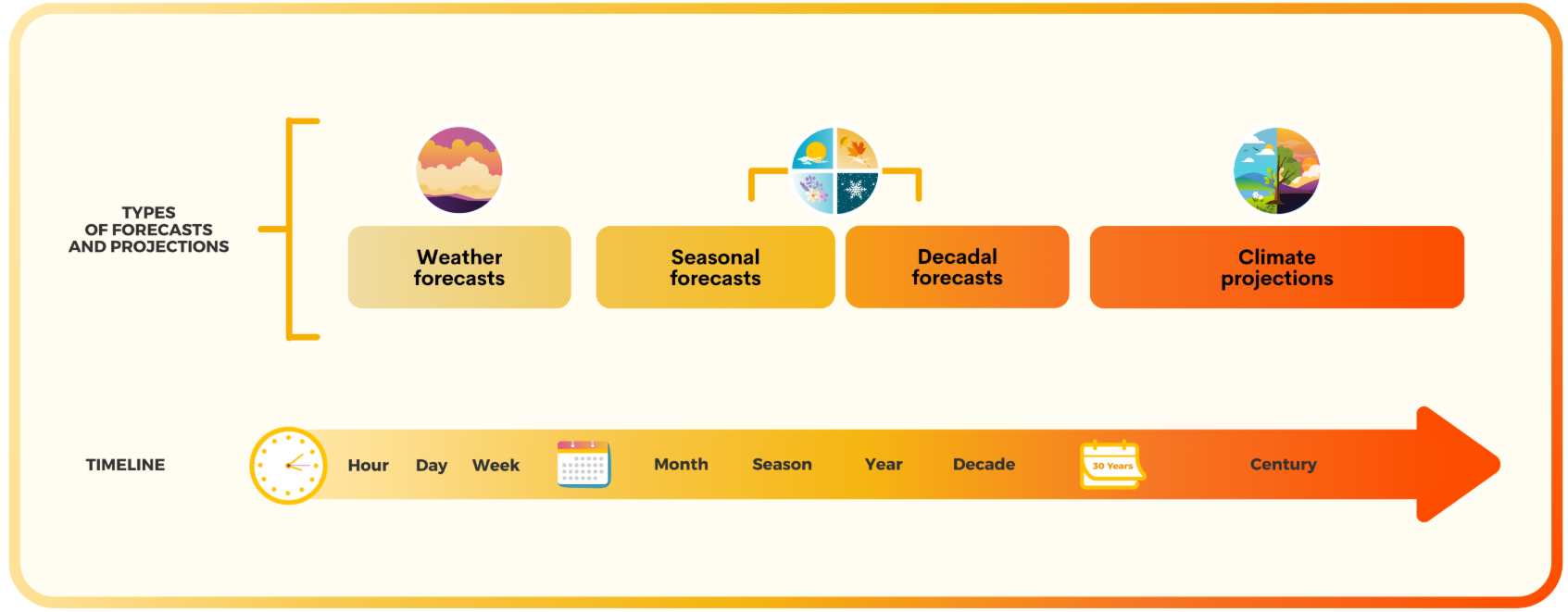
Decadal forecast products will be available on ClimateData.ca later this year.
Ready to jump into the data? Click here: Explore Maps – ClimateData.ca
Why This Matters
The ClimateData.ca seasonal and monthly forecast maps are built on the same forecast models developed and used by Environment and Climate Change Canada (ECCC) (Seasonal forecasts for Canada). ClimateData.ca is building on this foundation to offer more forecast products and functionality to make seasonal forecasts easier to find, explore, and use.
On ClimateData.ca, you can now:
- Check the forecasts for your location, using the zoomable map interface you are already familiar with from other ClimateData.ca products.
- Compare seasonal forecasts with historical data and future climate projections, to support decision-making based on information across multiple time horizons—from the 1950s to the end of the century.
- Access clear explanations and supporting guidance, including Learning Zone content, blogs, FAQs, and additional resources to help you interpret these probabilistic forecasts and understand their uncertainty.
- Download monthly and seasonal forecasts in consistent formats, making it easier to bring these forecasts into existing workflows, analyses, and reports.
In short, these products do not replace existing ECCC forecasts; they extend and repackage them in a user-friendly format, designed to support real-world planning and adaptation decisions.
What do Seasonal Forecasts Show?
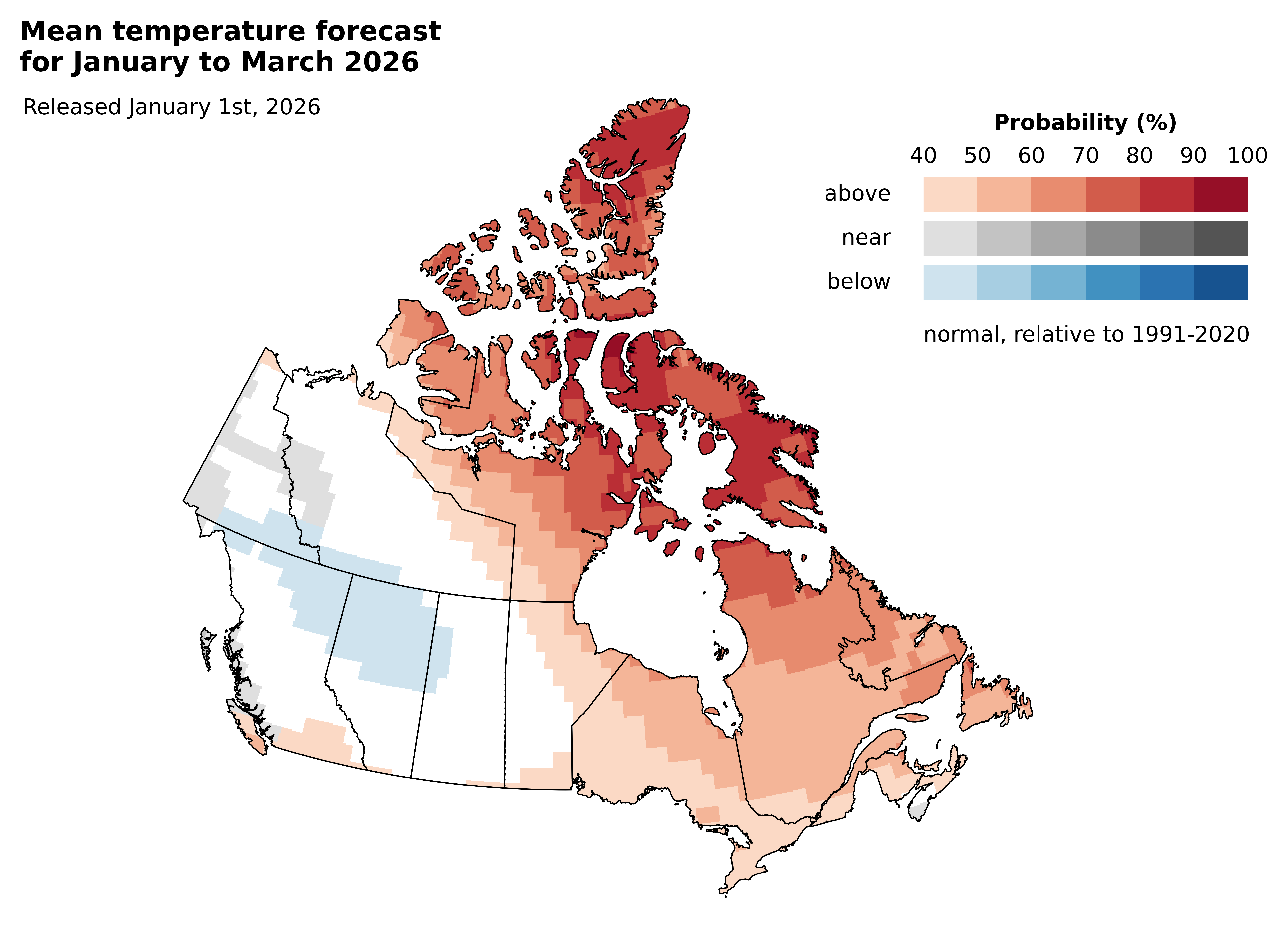
Seasonal forecasts predict how climate conditions for an upcoming season (a period of three months) are likely to compare with the past. They describe the probability that variables—such as temperature and precipitation—will be higher or lower than past conditions (the current baseline period that is used to compare seasonal forecasts is 1991-2020). Forecasts tell us how likely it is that variables will be “above, near, or below” normal or “unusually high or low” compared to the past period conditions.
Read more about what all of these conditions mean here: What are Seasonal Forecasts? – ClimateData.ca.
What Seasonal Forecasts Do Not Show
Seasonal forecasts provide the probability of different outcomes occurring in the coming months, but they do not predict specific weather events. For example, they can tell you how likely it is that the season, as a whole, will be characterized by unusually high amounts of precipitation, but they cannot tell you if extreme precipitation will occur on any given day or week within the season. They do not show:
- Daily or weekly weather, such as the timing of storms, heatwaves, cold spells, or heavy precipitation events.
- Short-term variability within a season—meaning a season that is forecast to have a high chance of “above normal” temperatures can still include colder-than-normal days, and vice versa.
- Local, short-lived hazards, such as thunderstorms, tornadoes, or flash floods.
Seasonal forecasts describe the most likely seasonal conditions overall, based on model predictions. They are best used for planning and risk management at seasonal timescales and cannot be used for operational real-time decisions based on weather. For example, an outdoor skating rink operator could use the seasonal or monthly forecast to see if the region where their rink is located will likely be warmer or colder than normal, but the operator cannot see the specific days on which they might need to close the rink due to high temperatures.
For What Can You Use Seasonal Forecasts?
A key benefit of seasonal forecasts is that they provide information up to a year in advance. For plans and decisions that can benefit from advance knowledge about the most probable seasonal conditions, these forecasts provide information that can be used to weigh the benefits and risks of taking different actions.
Examples include adjusting operations in:
- Agriculture – adjusting seeding timing, fertilizer and irrigation application windows, harvest timing, or exploring new crop options.
- Energy – adjusting energy load expectations, planning for potential surpluses or shortages, preparing additional energy supplies, and scheduling maintenance around anticipated heating or cooling demand.
- Water and watershed management – planning reservoir operations and hydropower generation, preparing for drier or wetter conditions, and managing seasonal water availability.
- Emergency and disaster preparedness – preparing messaging and coordination across jurisdictions, pre-positioning emergency resources and response teams.
- Transportation and infrastructure maintenance – planning for maintenance budgets and staffing, anticipating disruptions to transportation infrastructure due to seasonal conditions.
- Public health planning – preparing for hotter summers and heat-related illnesses, planning outreach campaigns and health system capacities.
- Outdoor recreational activities and tourism – preparing messaging and communications for unusual seasonal conditions, anticipating surpluses or reductions of tourists participating in seasonal activities like downhill skiing, skating, camping, hiking, etc.
- And more!
Box 1: To see examples of how seasonal forecasts have been used in real-world decision-making, read our existing blogs, (and watch for more on the “News” section of ClimateData.ca):
- I’m Dreaming of a Green Christmas: How Climate Change is Reshaping Christmas Tree Farming in the Balsam Fir Christmas Tree Capital of the World, Lunenburg, Nova Scotia – ClimateData.ca
- Climate Data in Action: Supporting Canada’s Maple Syrup Production – ClimateData.ca
- Climate Data in Action: Outdoor skating rinks in Canada – ClimateData.ca
How are these Seasonal Forecasts Produced?
Seasonal and monthly forecasts are produced by ECCC, generated by the Meteorological Service of Canada, developed by the Canadian Centre for Climate Modelling and Analysis, further processed into user-friendly data products by the Canadian Centre for Climate Services, and made available through the ClimateData.ca collaboration. The data for these forecast products is from the Canadian Seasonal to Interannual Prediction System (CanSIPSv3). Read more about how the forecasts are produced here: What are Seasonal Forecasts? – ClimateData.ca.
How often are Seasonal Forecasts Updated?
Seasonal forecasts are updated monthly, so you’ll always have access to relevant, up-to-date information.
Stay updated and check out our new and improved Seasonal to Decadal (S2D) Landing Page!
Visit the S2D Forecasts Landing Page to find:
- Current forecast products
- Learning Zone guidance
- News stories and FAQs
- Updates on new products coming soon
If there’s a seasonal forecast product you’d like to see on ClimateData.ca, or if you are interested in sharing how you use seasonal forecasts in your work, we’d love to hear from you – please fill out this form!
This project was undertaken with the support of:


