Fall Foliage and Climate Change

Date October 20, 2026
Author Casey Clunas, Canadian Centre for Climate Services
Topics Climate Data in Action
Share this post

Introduction

Changing leaves are a familiar sign of fall across much of Canada. But what determines when those colours appear, and how might a changing climate affect them?

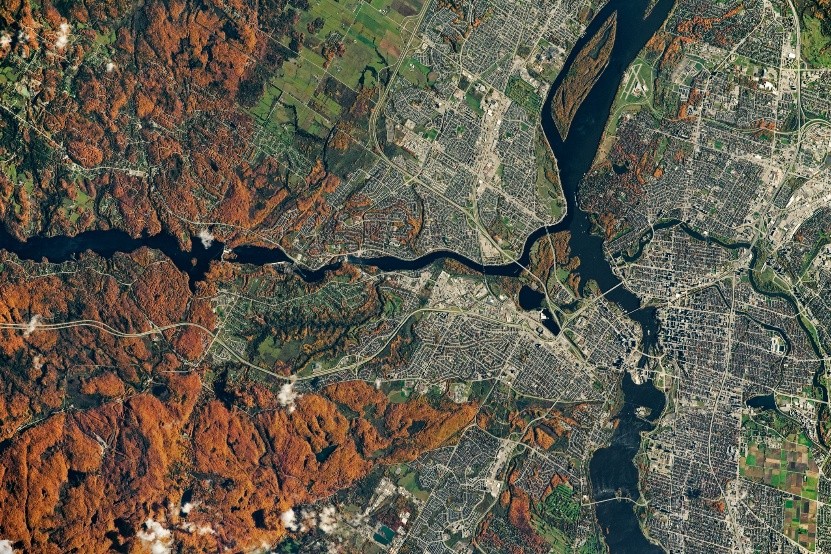
Fall colours take different forms across the country. The Western Larch turns bright yellow in the west. Maples, birches, poplars and oaks in Ontario, Quebec, and Atlantic Canada turn into a patchwork of crimsons, burnt oranges, and golden yellows. In the north, the tundra experiences a shift in colour visible from space from shades of green to red and orange.[1]

Climate change is altering the conditions that influence the timing and vibrancy of fall colours, as well as when leaves drop. These effects will vary across species and regions. In this article, we explore these connections and how resources on ClimateData.ca can help us understand what may lie ahead.

The science behind fall colours

Why do the colours change before the leaves fall off for the winter?

As a leaf reaches the end of its life, the plant recovers some of the nutrients from the leaves and moves them to other parts of the plant before the leaves drop; a kind of internal recycling called leaf senescence.[2]

During this process, the green pigment chlorophyll breaks down, revealing yellow and orange pigments called carotenoids that were already present in the leaf. Many plants also produce red pigments called anthocyanins during fall (Figure 1).

Temperature and day length work together to influence when trees begin leaf senescence. The timing also varies by species and region and can be affected by precipitation and extreme weather. Weather conditions also influence how vibrant fall colours become. Sunny days, for instance, help promote red pigment production, making cloudy, rainy falls more likely to result in less vibrant red colours.

Figure 1: Leaf pigments that cause fall colours. Graphic adapted from: NOAA (Why Do Leaves Change Color? | NESDIS | National Environmental Satellite, Data, and Information Service)

The impact weather has on leaf colouration varies widely. In one experiment with ginkgo and oak trees, temperature had a stronger effect on leaf senescence under low light than under bright light. Brighter light also prompted senescence to begin earlier. In that experiment, cooling advanced senescence more than warming delayed it.[3]

Other studies have found that warming can delay fall colour changes and extend the growing season.[4] One observational study found a larger response to warming than to cooling: a 1 °C increase in fall temperature was associated with senescence occurring about 7.5 days later, while a 1 °C decrease was associated with it occurring about 3.3 days earlier.[5]

Furthermore, warmer temperatures earlier in the growing season (before the summer solstice) can advance the onset of leaf senescence, while warming after the summer solstice can slow it, potentially extending the fall senescence period and delaying leaf fall.[6]

These findings illustrate the complex relationship between species, regions, and environmental factors that contribute to leaf senescence, including fall leaf colouration.

How will climate change impact future fall seasons?

As demonstrated above, the connection between climate conditions, leaf senescence, and vibrant fall foliage can be complex. Because of this, climate change is unlikely to result in a simple, uniform shift in leaf senescence, including fall colour vibrancy or timing, especially across the whole of Canada.

Although these interactions make it difficult to predict exactly how fall colours will change, there are still some climate indicators we can point to that do give us a broad picture of how conditions that shape them may shift (table 1).

For example, fall minimum and maximum temperatures provide information about the cool nights and warm days in fall that favour vibrant colours. Frost indicators, such as the number of frost days[7], help describe potential exposure to freezing conditions that can damage leaves and cause early browning or leaf drop.

Heat and moisture also matter. Indicators such as the hottest day, days above a temperature threshold, and heat wave duration can help describe conditions that may stress trees and cause leaves to brown or shrivel prematurely. Precipitation totals and the number of wet days provide information about water supply, while the Standardized Precipitation Evapotranspiration Index (SPEI) considers both precipitation and atmospheric water demand to help assess drought conditions. Drought before and during fall can affect leaf health and colour displays, although local soil conditions and other factors also influence how trees respond.

Together, these indicators offer insight into how favourable conditions and potential stresses may change, even though they cannot directly predict the timing or vibrancy of fall colours.
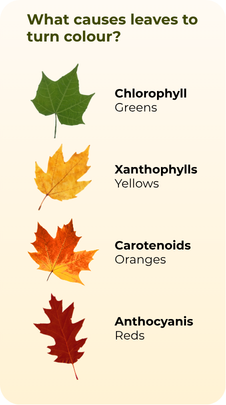
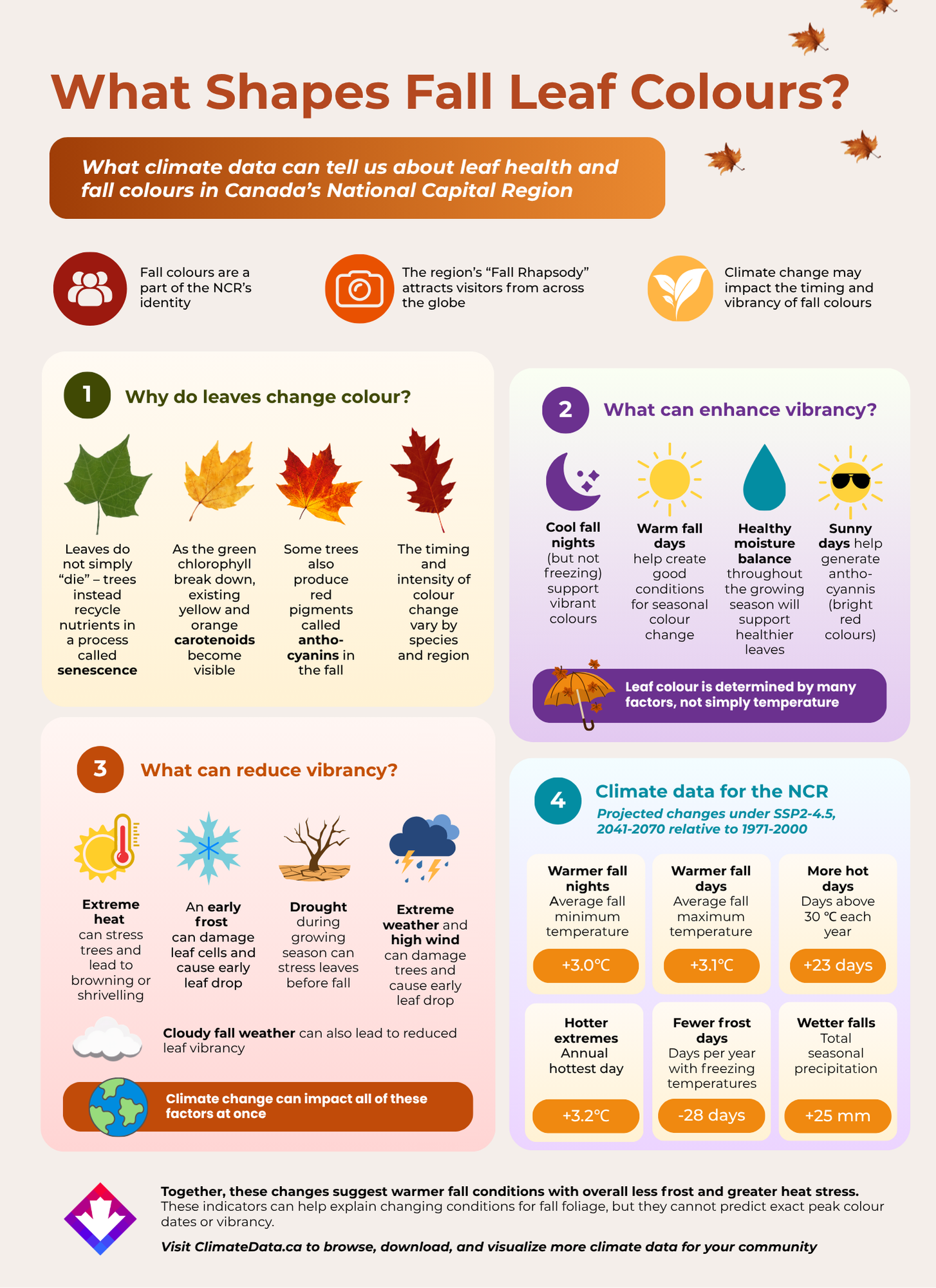
Table 1: Climate variables that impact leaf senescence (including colour change)
Factor Climate variable proxy Description
Fall nights Minimum temperature Cool, but not freezing, nights are optimal for vibrant colours.
Fall days Maximum temperature Warm, but not too hot, days are optimal for vibrant colours.
Extreme heat
  • Hottest day
  • Days above Tmax
  • Heat wave (total duration, frequency, index)
Extreme heat or heat stress can lead to tree/leaf stress and impact colour display through browning leaves or shriveling.
Frost & extreme cold
  • Frost days
  • Minimum temperature
Frost and extreme cold can damage leaf cells, causing leaves to brown or fall early, impacting the colour change process.
Drought*
  • Total precipitation
  • Wet days
  • Standardized Precipitation Evapotranspiration Index (SPEI)
Drought conditions leading up to and during fall can impact fall colour displays.

*Drought is a compound hazard and requires careful consideration of both climatic and non-climatic factors. See the Drought hazard page for more information on this hazard.

The National Capital Region (NCR; Ottawa, Gatineau, and the surrounding area) area provides an example of how several conditions that influence fall foliage may change together (figure 2). Looking specifically at Ottawa, under a moderate emissions scenario (SSP2-4.5), ClimateData.ca’s projections for 2041–2070 indicate that average fall minimum and maximum temperatures increase by approximately 3.0 °C and 3.1 °C, respectively, relative to 1971–2000. This means both the nights and days that help shape the seasonal transition become warmer. These seasonal averages, however, cannot tell us how often the combination of warm, sunny days and cool, frost-free nights will occur together.

Conditions before fall also matter. The projections indicate approximately 23 additional days above 30 °C each year, while the annual hottest day becomes about 3.2 °C warmer. These changes suggest greater exposure to heat that could stress trees before their leaves begin changing colour. Annual frost days decrease by about 28 days; a more detailed, seasonal analysis of changing frost days is needed to assess changes in freezing conditions during the colour changing season.

Expected changes in moisture are less straightforward. Fall precipitation increases by approximately 25 mm, while the number of wet days remains roughly unchanged. However, more seasonal precipitation does not necessarily mean a lower risk of drought. The timing of rainfall, summer conditions, and atmospheric water demand also matter. Taken together, these indicators help explain how the conditions affecting fall foliage may shift, without predicting a specific change in peak colour dates or vibrancy.

Fall Tourism & Seasonal Forecasts

Fall colours in the NCR are more than just a colourful season. Every year, the NCR attracts hundreds of thousands of visitors during the “Fall Rhapsody” season. The display of fall colours contributes to an influx of visitors. Knowing whether it will be a vibrant display each fall or if leaves may fall prematurely due to unseasonably cold weather is important for planning logistics around this highly time- and weather-sensitive tourist attraction.

Seasonal forecasts are one tool that can aid decision-makers who are dealing with these types of sensitive plans and operations. The seasonal forecasts available on ClimateData.ca are produced by Environment and Climate Change Canada and are updated monthly. These forecasts show how climate conditions over the next three months are likely to compare with the past, indicating the probability of above-, near-, or below-normal temperature and precipitation.

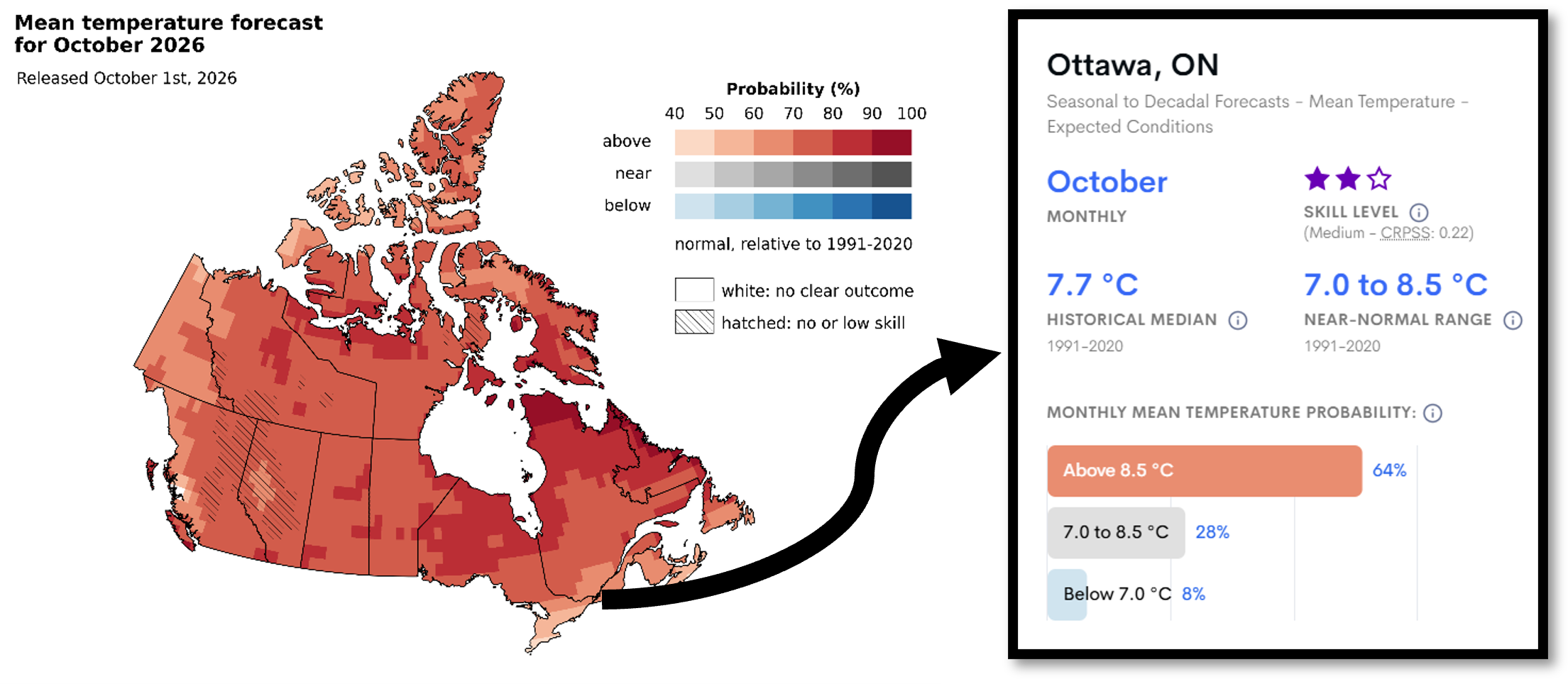
The seasonal forecast for October 2026 indicates higher probabilities of above- or near-normal temperatures in the National Capital Region. Ottawa has a 64% chance of above normal and a 28% chance of near normal temperatures this year. While seasonal forecasts can help gauge average conditions over a season they don’t predict exact day or nighttime temperatures. Decision-makers and planners in the NCR may want to consider seasonal forecasts as one tool for scenario planning for varying levels of fall leaf colour quality in the region.

Conclusion

The interacting environmental factors that impact leaf senescence and fall colours are highly complex and climate change is likely to change many of those environmental conditions. Shifts in fall colours may cause changes to the economies of some communities, like the NCR, but may also impact regionally important cultural activities for many Canadians. While climate data alone doesn’t predict future shifts in fall colours, projections and seasonal forecasts are tools that can help us understand the different components that impact them in the near and long term. With a changing climate, climate data is an important component to both understand and prepare for the future.

References

[1] An Early Look at Fall Color in Canada – NASA Science

[2] Leaf Senescence – an overview | ScienceDirect Topics

[3] Larger responses of trees’ leaf senescence to cooling than warming: Results from a climate manipulation experiment – ScienceDirect

[4] A century of climate warming results in growing season extension: Delayed autumn leaf phenology in north central North America | PLOS One

[5] Asymmetric temperature effect on leaf senescence and its control on ecosystem productivity | PNAS Nexus | Oxford Academic

[6] Effect of climate warming on the timing of autumn leaf senescence reverses after the summer solstice | Science

[7] The annual number of frost days is not specific to fall, but a projected decrease in frost days indicates an overall reduction in the frequency of freezing temperatures across the year, including potentially during fall. However, this indicator does not tell us when frost occurs or how freezing conditions during the fall foliage season may change.

Other materials consulted