Climate Foundations for Post-Secondary Classrooms

Date March 19, 2026
Author Rachel Malena-Chan, Canadian Centre for Climate Services
Topics Get Climate Smart
Share this post

Introduction

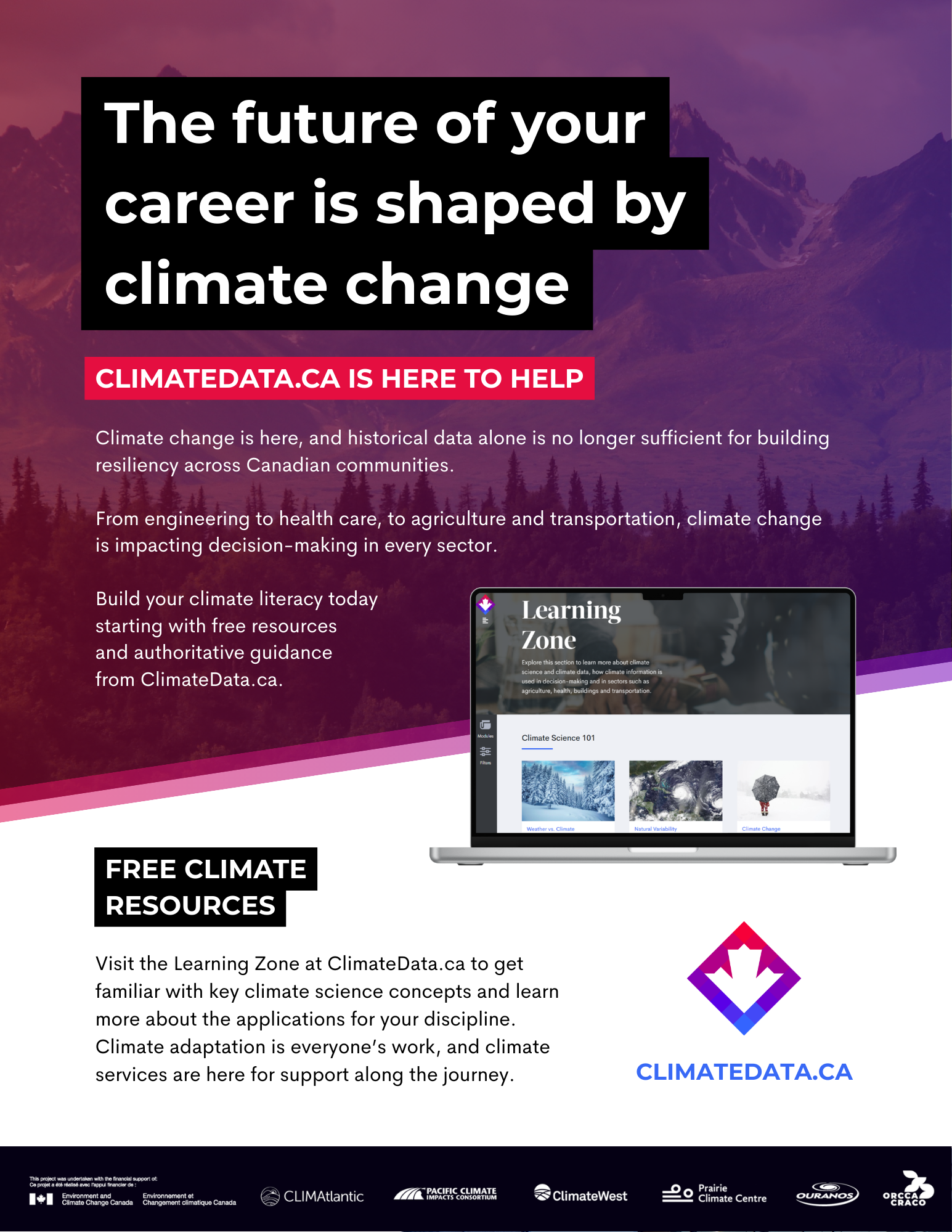
Climate change is here, and historical data alone is no longer sufficient for building resiliency in Canadian communities. From engineering to health care, to agriculture and transportation, climate change is impacting decision-making in sectors across the country. To prepare for the future of their careers, Canadian post-secondary students can build the foundations of climate literacy using free learning tools available through the Learning Zone on ClimateData.ca.

The Learning Zone on ClimateData.ca is a useful tool for students, researchers, and educators to help strengthen understanding of climate projections. It contains dozens of articles, as well as videos, podcasts, and guidance related to Canadian climate data and its applications to a variety of sectors. Contributors come from a national network of Canada’s leading climate service hubs.

We have compiled learning tools from the Learning Zone to support post-secondary educators to use ClimateData.ca as they build climate literacy in the classroom.
Key messages

  •  
  • All industries and sectors are impacted, directly or indirectly, by changes in climate.
  • Students, researchers, and educators can use the Learning Zone on ClimateData.ca to deepen their understanding of climate change.
  • We have developed a suite of new resources for Canadian educators to help build climate literacy:

Build climate literacy through the Learning Zone

To support educators in sharing the Learning Zone resources, we are pleased to provide a walkthrough of foundational articles and learning tools. Each slide can be pulled out and repurposed to fit with your particular lesson plan, or the full presentation can be provided to students for an independent exploration of relevant learning materials.

Here’s what you’ll find in the Climate Foundations presentation deck:

1. Climate basics

Learn the basic key messages about climate change in Canada, its dominant causes, and how warming varies across Canada.

  • Find plain language explanations of key climate science concepts
  • Explore how the climate has already changed
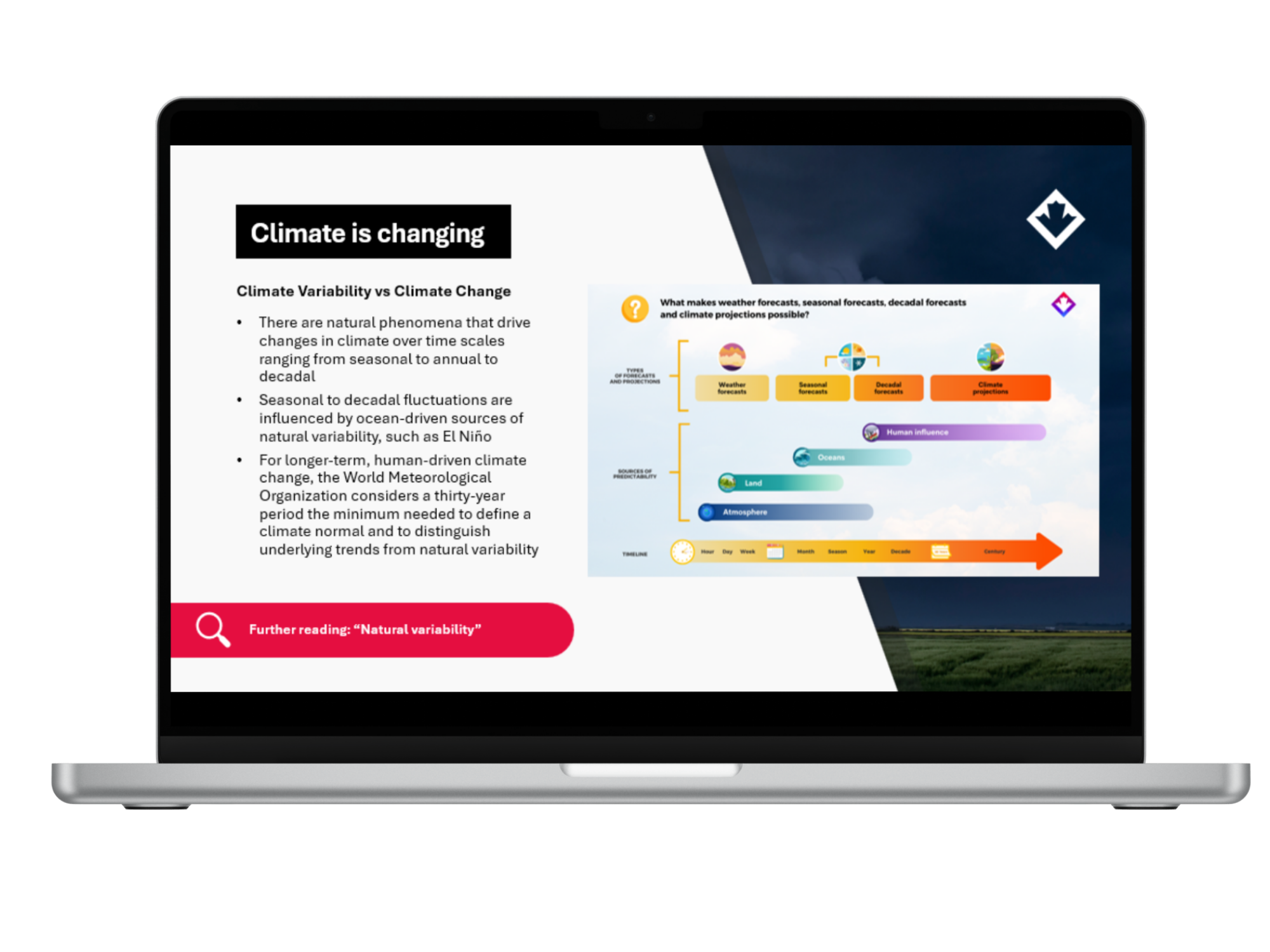
  • Explore the difference between climate variability and climate change


2. Understanding historical data

Get familiar with sources of historical climate and weather station data on ClimateData.ca.

  • Identify the different types of historical climate data
  • Consider how historical data alone are no longer adequate for future planning or adaptation
  • Learn about choosing the most appropriate historical datasets

3. Understanding future climate projections

Deepen understanding about possible futures, uncertainty surrounding those pathways, and how to interpret climate models.

  • Learn about possible futures and how to interpret different climate pathways
  • Visualize the differences between climate models
  • Understand Global Warming Levels and how they are used

4. Deep Dive Topics

Now that you have learned the basics, explore different regions, applications, and timescales through a climate data lens. Note that this section is not comprehensive, as we are continually updating the Learning Zone with new topics and dataset guidance, but these slides will give you a starting point for digging into specific applications suited to your group of learners. For example, the slides in this section are designed to support students to:

  • Learn about the differences between seasonal forecasts and climate projections
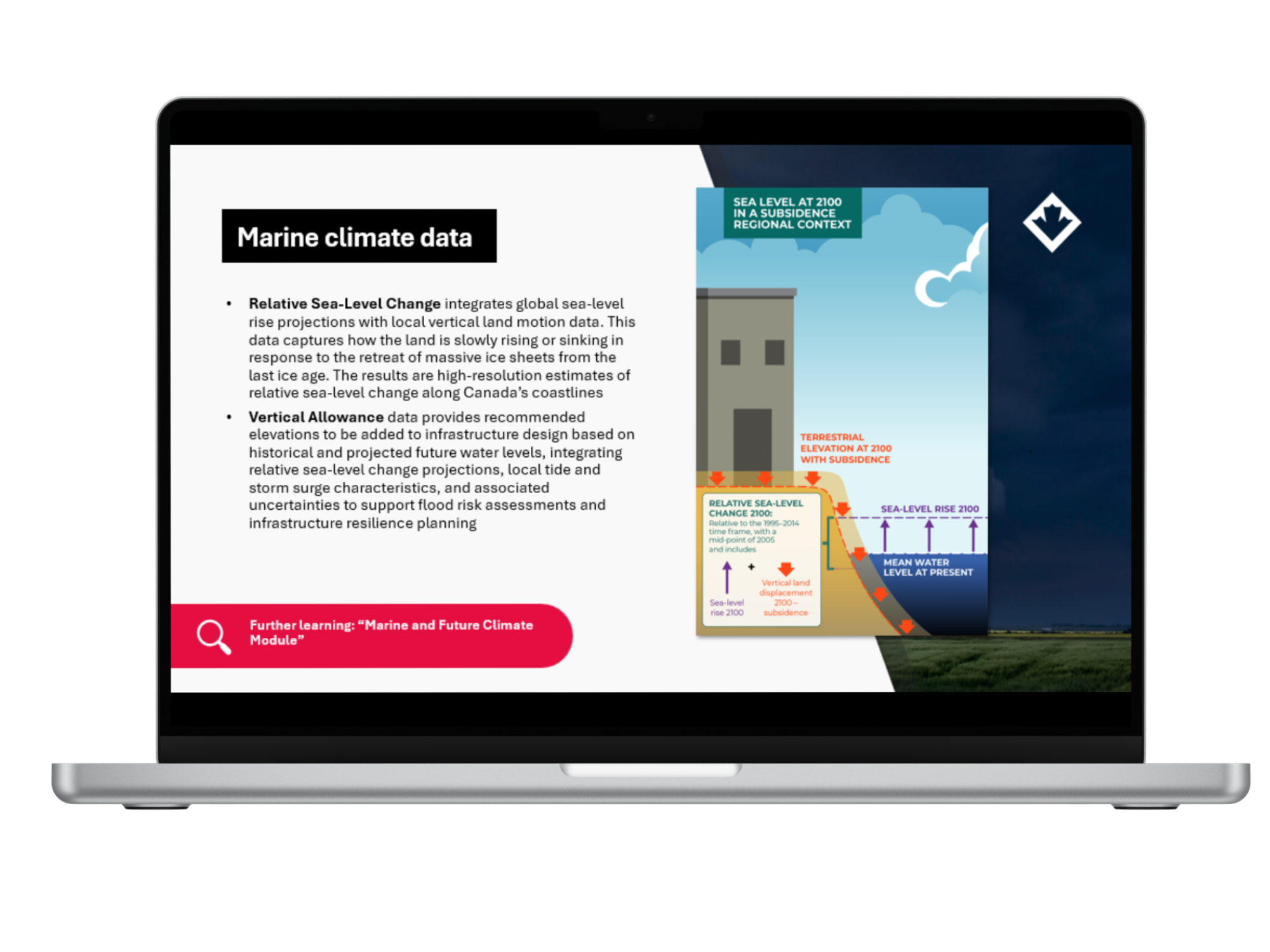
  • Explore climate data specific to coastal and northern communities
  • Apply climate concepts to building design
  • Explore datasets related to extreme weather events
  • Learn more about Canada’s regional climate data hubs
  • Check out the ClimateData.ca podcast

5. Sector-specific learning tools

Climate change affects all types of Canadian professional sectors. The final section of the deck goes through climate data resources for a range of disciplines. These slides cover Learning Zone articles that have been developed or selected for specific sectors, such as engineering, health, and agriculture:

  • Designing future-ready buildings
  • Public health and future climate
  • Agriculture and future climate
  • Transportation and future climate

Get comfortable with interactive climate data tools

Once your class has had a chance to cover the basic concepts behind historical and future climate data, use our interactive guide to help students get comfortable using climate data tools. We’ve developed a presentation deck that walks through how to use the portal’s map features, as well as an activity worksheet to guide engagement and reflection.

Draw from the Exploring ClimateData.ca (PDF) to get to know Canada’s national climate data portal. Learn how to search for, download, and analyze climate variables for your community, and explore dimensions of change, such as time periods and emissions scenarios.

It includes:

  • Step-by-step guide to exploring authoritative climate data available through ClimateData.ca
  • Screenshots of the portal showing how to find variables and navigate the interactive map to find data for your community

Final thoughts

To summarize, here is how you can use these materials with your group of learners:

Climate change is shaping our future, so it is important to build climate literacy today. Climate adaptation is everyone’s work, and climate services are designed to support the journey.