Impact of changing snowfall in Canada
Snow plays a key role in weather and climate across Canada, influencing both the environment and economy. Snowfall is a major source of freshwater and is also linked to several natural hazards, including droughts, floods, and storms. Snowfall accumulation (snow depth) influences ground temperatures and the thickness of lake and sea ice via its reflective and insulating properties. Declining seasonal snow accumulation reduces water availability in the spring, affecting agriculture and hydroelectricity production and potentially increasing wildfire risks. Canada’s billion-dollar winter recreation industry1 relies on consistent snow and cold temperatures.
While declining snowfall can be problematic, the same can be said for too much snowfall, particularly in regions that historically have not experienced high amounts of snowfall. In these cases, an increase in total winter precipitation, particularly over a short period of time, can challenge infrastructure (e.g., increase the risk of roof collapse), strain snow removal, emergency assistance and other services, and create challenges for accessing food and water.
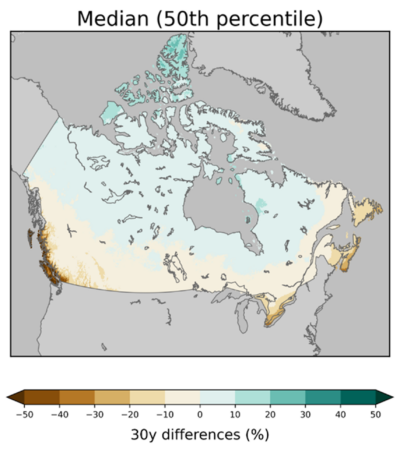
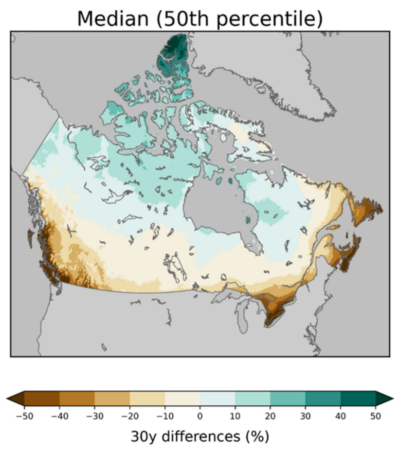
Climate change is causing a decline in both the spatial extent of snow cover and the amount of seasonal snow accumulation across most of Canada2,3. From 1981 to 2015, most of Canada experienced a decline in snowfall, except for the Northwest Territories and western Nunavut.