Days Above 25°C
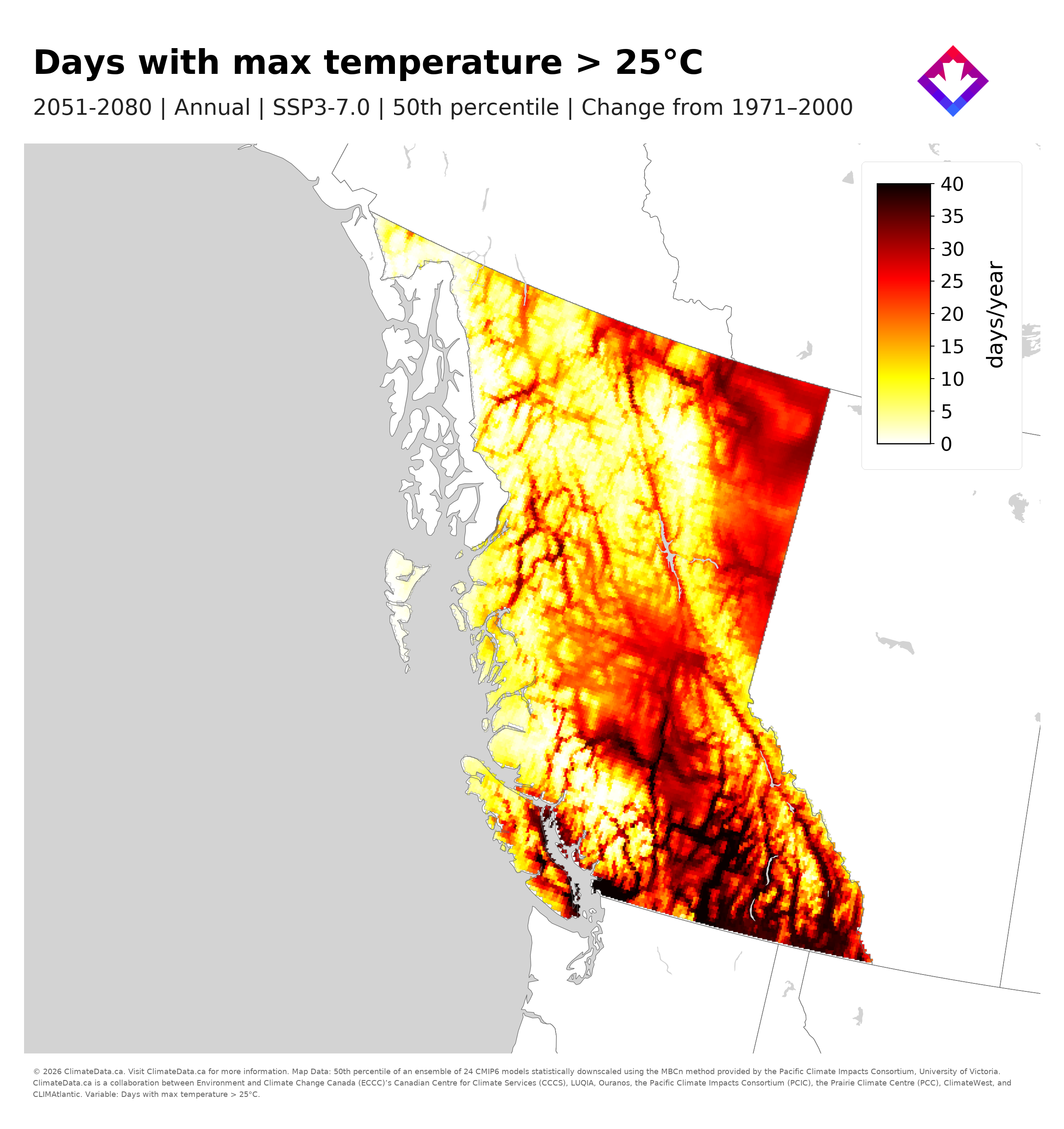
One way to examine future warming in BC is by looking at projected changes in the number of warm summer days each year (days with a maximum temperature above 25 °C). Climate projections show that much of the province is expected to experience overall increases in the number of days above 25 °C by the mid-to-late century period (2051–2080) compared to the historical baseline period (1971–2000), especially under a high emissions scenario (SSP3-7.0). Visit our Learning Zone article Understanding Shared Socio-economic Pathways (SSPs) to learn more about future emissions scenarios.
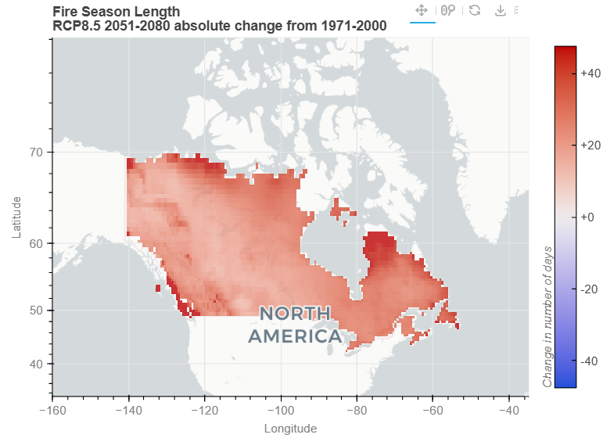
The largest increases are projected across southern BC, the central interior, parts of Vancouver Island, and northeastern regions of the province (Figure 7a). In some areas, projections show more than 40 additional days above 25 °C each year, on average.More frequent hot days can contribute to increased evaporation, drier soil and vegetation, longer snow-free periods, and conditions that support longer and more active fire seasons.
Total Summer Precipitation
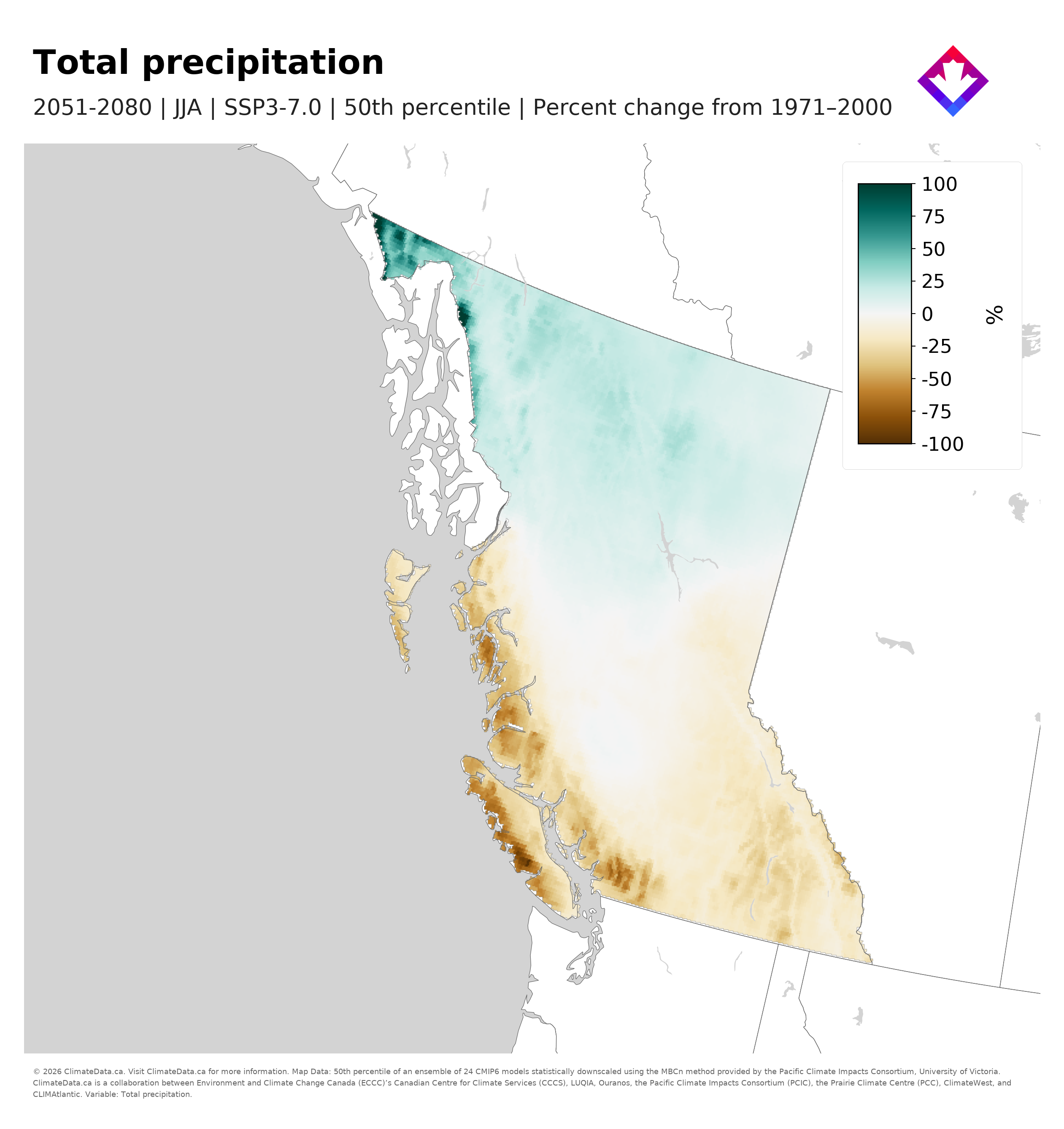
Climate projections also suggest that by 2051–2080, much of the province is projected to receive less summer precipitation compared to the 1971–2000 average (southern half of B.C.), whereas the north is projected to receive more precipitation, on average (Figure 7b). The largest projected decreases occur along parts of the coast, including Vancouver Island and Haida Gwaii.Taken together, an increase in days above 25 °C combined with a decrease in total summer precipitation implies that present-day challenges related to diminishing snowpack and drought are likely to continue well into the future. These changes have important implications for water availability, ecosystems, and wildfire risk across British Columbia.
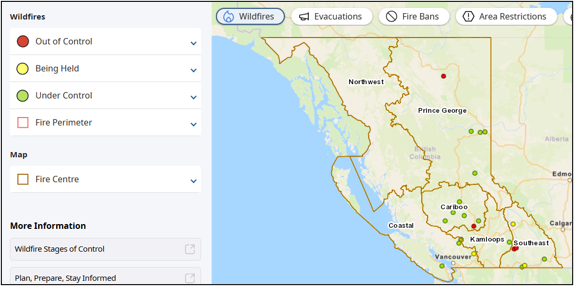 Figure 1: Current wildfires as of May 11, 2026. Source: